Table of Contents
coastal landscapes face continuous salt aerosol, wind exposure, and sandy soil conditions that compound over time. Success depends on buffering layers, drainage discipline, and resilient structural selections not on maintenance effort alone.
Key Points
Coastal landscapes fail when treated as standard sites with “a few salt-tolerant plants added.” Red Sea exposure creates chronic stress that builds over seasons. These controls keep performance stable.
Coastal Landscape Banner
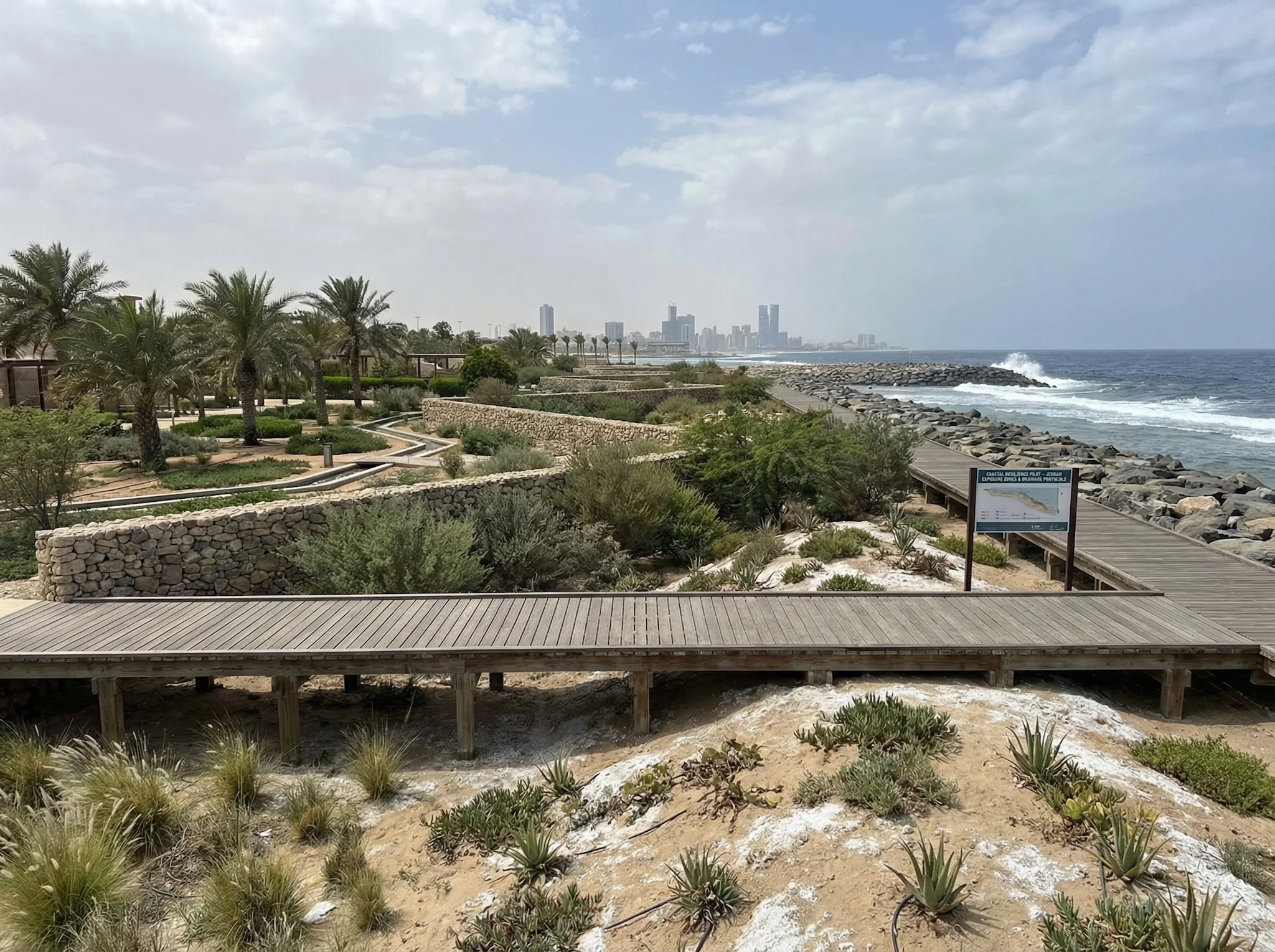
Coastal buffers reduce salt and wind stress
Build the Coastline From the Outside In
Coastal success is built from the outside in. The first three steps establish the frontline: understand exposure, build protective layers, and prevent salt from accumulating in the root zone.
1. Design for exposure
Identify windward edges and salt-exposed zones, then assign tolerant planting and protective massing before placing sensitive species deeper within the site.
2. Build buffering layers
Use layered planting (frontline tolerant species + secondary shade/screen) rather than a single hedge line that takes full stress and fails unevenly.
3. Prevent salt accumulation
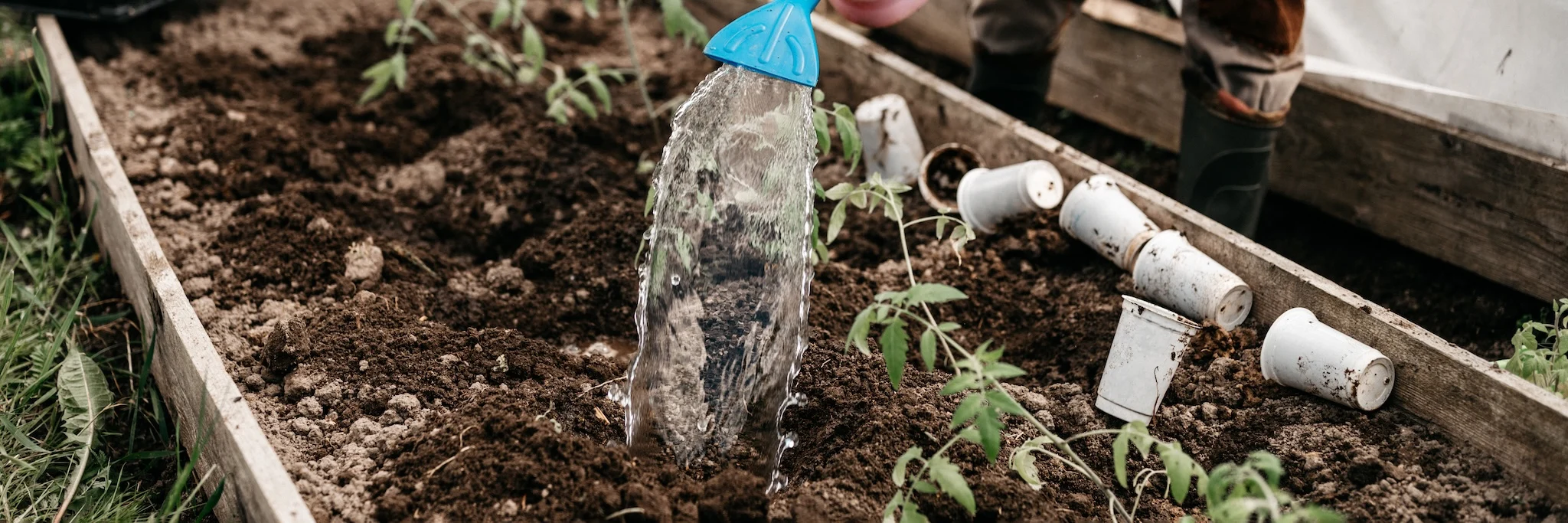
Specify drainage, avoid over-compaction, and align irrigation practices to prevent surface crusting and salt concentration. Stable drainage is a coastal necessity.
4. Select for structural strength
Prioritize trees and palms with stable form and branch strength. Weak-structured selections increase breakage, emergency pruning, and maintenance escalation.
Fast Win: Define the Frontline Palette First
Lock the windward palette early and treat it as protective infrastructure. A stable frontline expands your interior palette and reduces long-term replacement.Common Mistake: Single “Front Line” Planting
A single hedge or row absorbs full exposure and fails first, creating gaps, uneven aesthetics, and escalating maintenance. Layering distributes stress and improves durability.Common Coastal Design Mistakes
Avoid placing feature ornamentals on windward edges, ignoring drainage behavior, or assuming that frequent irrigation compensates for salt exposure. Coastal sites need protection and drainage discipline.
Buffer Layer Plan
Define a clear buffer strategy: frontline tolerant layer + secondary protective layer + interior feature planting. This is the simplest way to keep coastal projects visually consistent.
Drainage and Leaching Notes
Document how the site drains and how salinity is managed (without wasting water). A clear approach prevents chronic decline and reduces replacement cycles.


Practical Implementation Notes
Coastal success is not achieved through effort alone; it is achieved through protection layers and soil-water control. When that logic is built in, maintenance becomes routine rather than corrective.
With buffers and drainage discipline, the shoreline becomes a stable landscape asset.