Table of Contents
Water efficiency in Saudi landscapes is achieved by design discipline, not labels. Hydrozones work when they reflect how water will actually be delivered, monitored, and maintained, under heat, wind, and variable soils.
Key points
Water efficiency is often discussed as a plant-selection issue, but the decisive factor is how planting areas are grouped, irrigated, and maintained under real site pressure. The key points below reflect what consistently reduces water waste while protecting visual quality.

Keep selection disciplined and reduce replacement risk
Hydrozones align water use with performance
Zone Logic That Holds Up in the Field
Effective hydrozones are built in layers: define logical groups by demand and exposure, ensure the soil profile supports stable moisture, then choose irrigation methods that teams can maintain. This sequence prevents water conflict from being designed into the landscape.
1. Group by demand and exposure
Separate high-evaporation edges, shaded planting, tree establishment zones, turf zones, and planters. A zone should not contain conflicting needs that force one schedule to injure part of the zone.
2. Build soil to hold moisture without suffocation
Improve infiltration and root oxygenation, then protect moisture with mulch and correct grading. The goal is stable moisture in the root zone, not wet surfaces and stressed roots.
3. Match irrigation method to risk
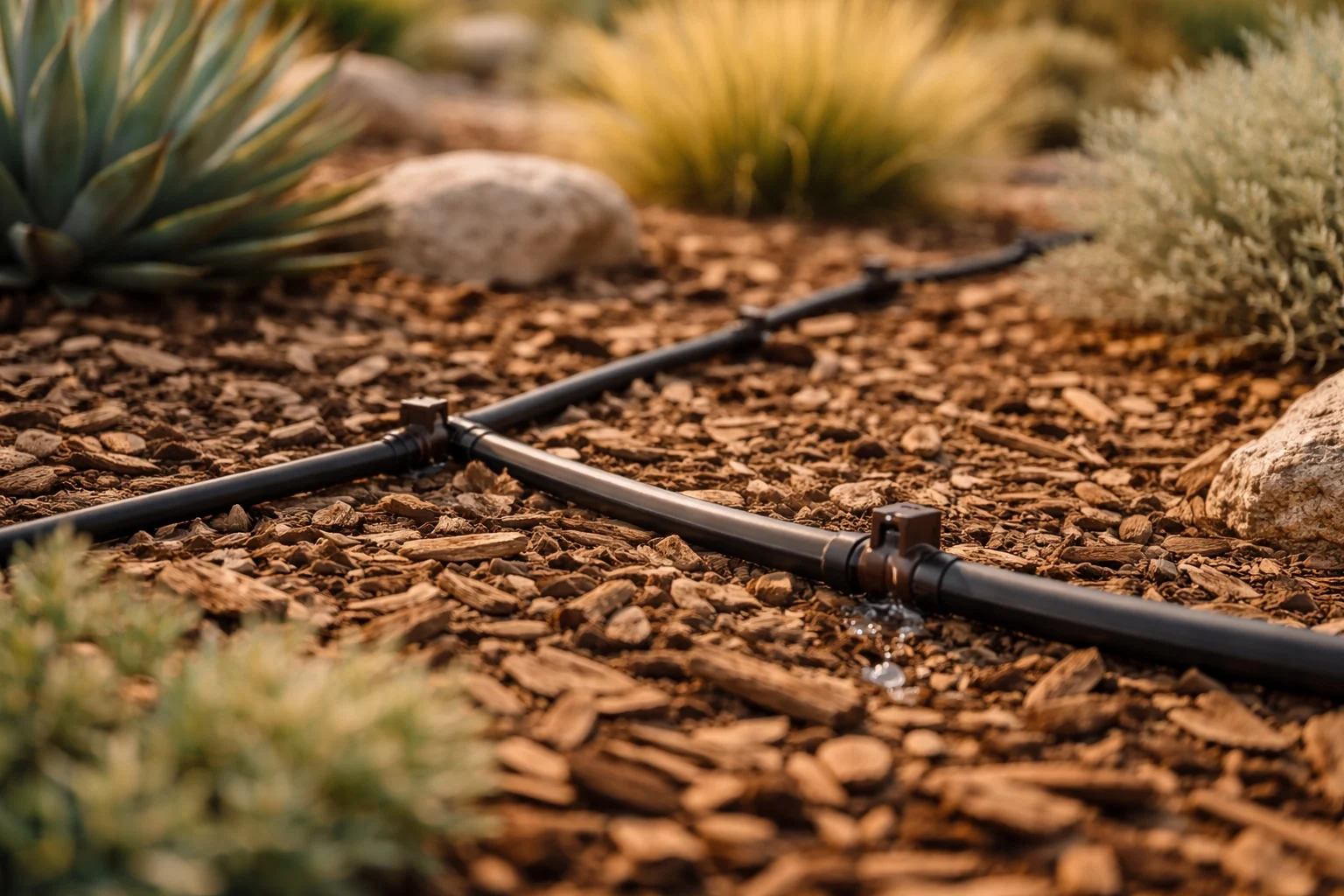
Use drip in beds and planters, targeted deep watering for trees during establishment, and sprinklers only where appropriate and maintainable. Ensure filtration and control points are accessible.
4. Make maintenance predictable
Document seasonal adjustments, flushing routines, and inspection frequency. The simplest system a real team can maintain consistently will outperform complex systems.
Fast Win: Start With Four Clear Zones
Begin with a small number of zones (for example: trees, shrubs/groundcovers, turf, planters) and refine only if operationally justified. Over-zoning increases failure points and makes tuning harder across seasons.Why it matters
Common Mistake: Designing Zones for Visual Continuity
Do not combine areas simply because they look adjacent on the plan. A shaded courtyard bed and a sunny roadside bed may share aesthetics, but they rarely share water demand or exposure.What outcome it protects
Common Zoning Mistakes
Avoid hydrozones that mix opposing conditions (sun and deep shade, coastal edge and sheltered interior, turf and tree pits). Zoning must be defensible in operations: one schedule should support every plant in that zone without compromise.
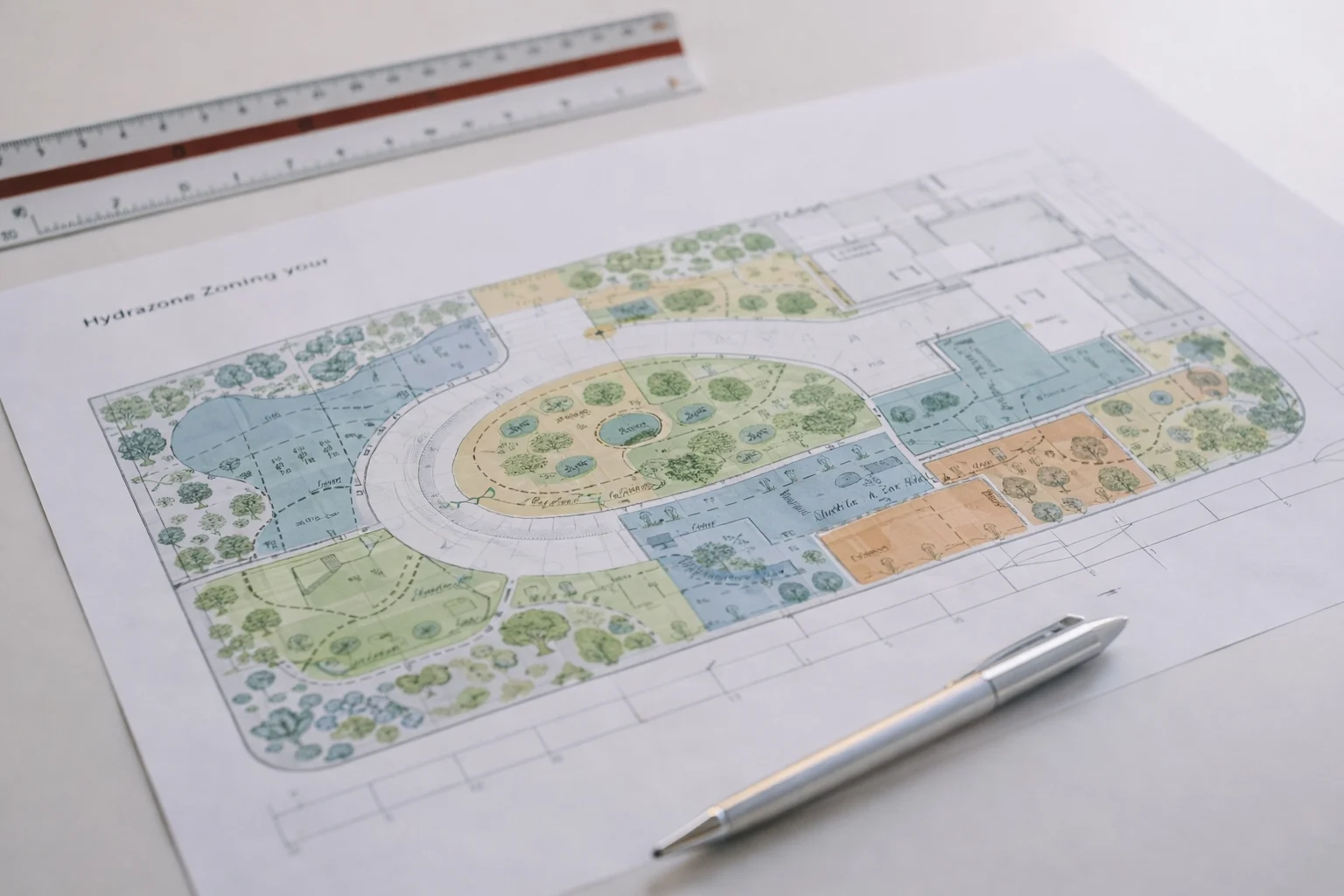
Hydrozone Map
Publish hydrozones as a project-controlled map, not an informal concept. A clear map prevents scope drift and keeps irrigation programming aligned with the design intent.
Seasonal Tuning Plan
Define how irrigation changes across the year (summer peaks, shoulder seasons, winter reduction). This prevents “set once and forget” behavior and improves plant stability under Saudi climate swings.

Practical Implementation Notes
A well-built hydrozone strategy reduces water waste, replacement rates, and maintenance escalation. It also simplifies client conversations: the landscape performs because its water logic is designed, documented, and maintainable.
When zones are defined by demand and exposure, the landscape stays consistent and water use becomes controllable.